Gardening Near Trees: How to Choose Plants That Thrive in Tree Shade
Every gardener has encountered those “impossible spots” — places where nothing seems to grow no matter how much effort you put in. One of the most common challenges? Planting underneath mature trees. Maples, in particular, can be especially tricky. Their shallow, greedy feeder roots quickly take over the soil, leaving little room for new plants to establish. Add in deep shade and the risk of damaging major roots when digging, and it can feel like an unsolvable puzzle.
But “impossible” doesn’t have to mean “hopeless.” With a thoughtful approach and the right palette of plants, it is possible to design thriving garden spaces beneath trees. In this post, we’ll explore the challenges of gardening near trees, share practical planting strategies, and highlight a planting palette that succeeded under a mature maple tree.
Understanding the Challenges of Gardening Near Trees
If you’ve ever tried to dig a planting hole under a mature tree, you know how frustrating it can be. What looks like soft, shaded soil often turns out to be a web of stubborn roots. Sometimes you can’t even get a shovel in the ground close to the trunk — the soil is simply too dense and root-filled to work with.
Shade That Changes Through the Seasons
Dense leaves block out much of the sunlight, which means even shade-loving plants struggle to get enough energy to thrive. Because the shade shifts through the seasons — light in spring, darker in midsummer — it can be tricky to know what conditions you’re really planting into.
Intense Root Competition
Maples and other mature trees form a dense mat of shallow feeder roots that soak up nearly all available moisture. Any perennial or shrub planted nearby is instantly competing for water and nutrients with a much stronger opponent.
Limited, Root-Filled Planting Space
Close to the trunk, digging can be nearly impossible. Large structural roots often prevent even a shovel from breaking the ground, and cutting into them risks serious damage to the tree. Farther from the base, you may find occasional pockets of workable soil — but the deeper you dig, the more root competition you encounter.
Altered Soil Conditions
Years of root activity and leaf litter can make the ground dry, compacted, or even slightly altered in pH. Add fallen twigs, leaves, and seeds, and you’ve got constant cleanup on top of the planting struggle.
Good to know: When tree roots or branches are truly overwhelming, it may be time to bring in experts like Hampton Tree Experts who can safely manage roots, thin the canopy, or advise on protecting both your tree and your garden.
Best Plant Choices for Shade Gardens Beneath Trees
Once you’ve accepted the challenges of gardening under trees, the next step is choosing plants that don’t just survive but actually thrive in those conditions.
What to Look For
- Shade-tolerant (able to cope with reduced light)
• Shallow-rooted (to settle into thin layers of soil)
• Drought-tolerant (since tree roots take most of the water)
• Competitive spreaders (plants that can hold their own against roots)
General Shade-Friendly Options
- Groundcovers: Hostas, ajuga, lamium, sweet woodruff
• Shade perennials: Astilbe, hellebores, bleeding heart, ferns
• Spring bulbs: Daffodils, snowdrops, bluebells (they bloom before trees fully leaf out)
• Understory shrubs: Hydrangea, azalea, camellia
Case Study: Planting Under a Maple Tree
Recently, we designed a planting scheme under a well-established maple. Digging revealed only a few pockets of workable soil between large roots, so the plant choices had to be especially tough. Here’s the palette that worked:
Geranium macrorrhizum
A groundcover that’s practically built for impossible spots. It spreads with shallow surface roots, tolerates drought, and produces brilliant pink or white blooms in spring. Bonus: deer-resistant foliage that turns reddish in fall.
Carex flacca ‘Blue Zinger’
A sedge with soft blue-green foliage that weaves beautifully through other plants. It thrives in shallow, dry soil and spreads by rhizomes to fill gaps between roots. Plant in groups for texture and movement.
Polystichum acrostichoides (Christmas Fern)
A classic evergreen fern that handles shade and rocky, root-filled soils. Slower to establish than Geranium or Carex, but once settled, it provides a deep green backdrop all year.
Helleborus orientalis (Lenten Rose)
Evergreen perennial with glossy leaves and long-lasting spring blooms. Shallow-rooted, deer-proof, and drought-tolerant once established. We chose a double white cultivar, ‘Wedding Bells’, for elegant contrast.
Pro tip: In root-heavy areas, smaller plants in quart pots or plugs establish more successfully than larger container specimens. They adapt to limited soil pockets more easily and develop stronger root systems over time.
Design Tips for Harmonious Tree + Garden Spaces
Planting under trees isn’t just about choosing the right plants — it’s also about how you plant and arrange them. A few thoughtful design strategies can make the difference between a struggling patch and a lush, eye-catching garden.
Start Small for Better Survival
Large container plants often fail because their root balls can’t compete with established tree roots. Smaller plants — quart-sized pots or plugs — adapt more easily and knit together quickly once established.
Plant in Groups for Impact
Rather than scattering, cluster plants in odd-numbered groups (5, 7, 9). This creates a natural, full look and helps each species hold its ground against encroaching tree roots.
Prepare the Soil Carefully
Work with the soil pockets you find between major roots. Use a sharp, narrow shovel or trowel to carve planting holes, and enrich each pocket with compost to give young plants the best start. Avoid cutting into large roots.
Mulch for Moisture and Protection
A light layer of mulch helps retain moisture, suppress weeds, and stabilize soil temperatures. Keep mulch a few inches away from the tree trunk to prevent rot.
Keep Watering Consistent
New plantings need extra help to establish, especially when competing with thirsty tree roots. Water regularly during the first growing season. Once plants mature, many will tolerate drier conditions.
Use Garden Accents to Lift Shady Spaces
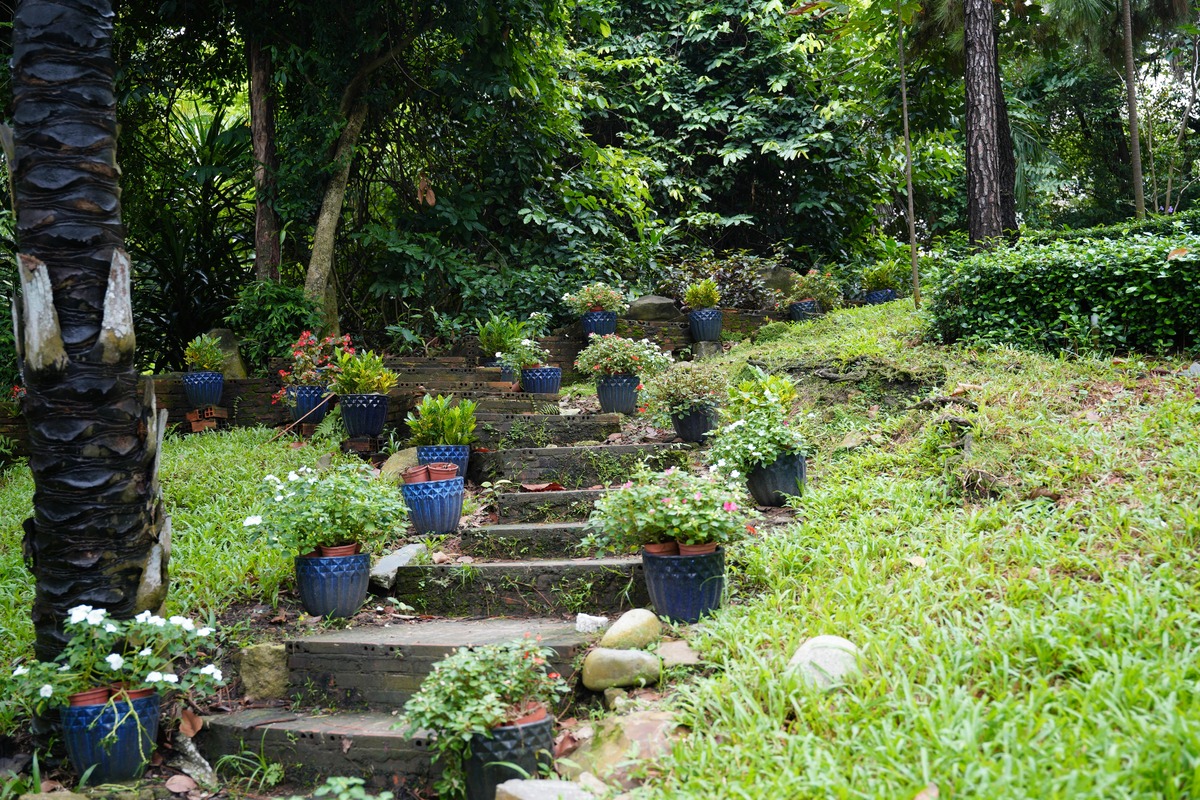
Shaded tree bases can feel dark or flat. Decorative ceramics, planters, or sculptural elements add visual lift and tie the space into the rest of the garden — a perfect moment for Annie’s Garden ceramics to shine.
When to Seek Professional Help with Trees
Even the best plant palette and careful planning can’t solve every challenge beneath mature trees. Sometimes the tree itself needs attention before the surrounding garden can thrive. That’s when it’s worth calling in a professional arborist.
- Overcrowded canopy: A dense canopy can starve plants of light. An arborist can thin branches to create dappled shade.
• Aggressive surface roots: Large, shallow roots may require professional guidance to manage safely.
• Hazardous branches: Overhanging limbs pose risks to people and property — these should only be handled by trained crews.
• Selective removal or land clearing: In some cases, removing a tree or clearing a portion of land enables a healthier, more balanced landscape.
Local help: For homeowners in the Hampton area, Hampton Tree Experts provide trusted arborist services — from safe trimming and canopy management to root care and land clearing.
Conclusion
Gardening beneath mature trees can feel like one of the toughest challenges in the landscape. Dense shade, thirsty roots, and compacted soil can leave even the most enthusiastic gardener discouraged. But as we’ve seen, these “impossible spots” don’t have to remain empty. With the right plant palette, thoughtful planting techniques, and a bit of creativity, it’s possible to transform the space beneath a maple or oak into a lush, layered garden.
The secret is working with the tree, not against it. Start small, group plants for impact, and choose species naturally adapted to dry shade. Add in a few design accents — like ceramics or planters — and suddenly the darkest corner of your garden becomes one of the most interesting.
And remember, when tree roots or branches feel overwhelming, you don’t have to tackle it alone. Professionals like Hampton Tree Experts can help manage canopy growth, advise on root care, and ensure your trees stay healthy while your garden thrives.
Ready to try it? Take another look at those “impossible spots” in your yard. With the right approach, they might just become your new favorite g